
Sun, Sand Traps & Sunshine State Golf

A British Golfer’s Guide to the Best Golf Courses in Orlando, Florida
Picture this: it’s a crisp January morning in Florida. The temperature is a glorious 22°C, the sky is the kind of blue you only get in holiday brochures, and you’re about to tee off on a beautifully manicured fairway while your mates back home are scraping ice off their car windscreens. Welcome to golf in Orlando — and it might just be the best decision you make this year.
Florida’s theme park capital has more than 200 golf courses within easy reach of the airport, and the best of them can genuinely compete with anything you’d find at a premier European destination. Unlike so many American cities, almost all of Orlando’s top courses are open to the public — no membership required, no intimidating members’ bar to navigate, no need to produce a handicap certificate at the gate. Just show up, pay your green fee, and play.
We’ve narrowed the field to four courses that every visiting British golfer should seriously consider — one luxury resort experience, one links-style adventure, one world-class value destination, and one that’s utterly unlike anything else in Florida.
Before You Tee Off: What British Golfers Need to Know
Golf carts are essentially compulsory. In Florida, a golf cart isn’t a luxury — it’s just how golf works. The good news is that at the vast majority of courses, the cart fee is already folded into your green fee. You’ll have a GPS screen mounted on the dash telling you exact yardages, and many carts come with an ice box stocked with complimentary water. It’s rather civilised.
Book early and book direct. Orlando’s best tee times — particularly anything before 9am in the peak November to April season — disappear weeks, sometimes months in advance. Booking directly through the course’s own website will almost always guarantee the best available price and, crucially, zero booking fees. Platforms like GolfNow and TeeOff.com also offer no-booking-fee tee times and occasional discounts of up to 50% on off-peak slots.
Twilight rates are your friend. Most courses operate a twilight pricing structure where fees drop significantly after 1pm or 2pm. If you don’t mind playing in the afternoon heat (early morning is always more comfortable in summer), twilight rounds offer exceptional value.
Tipping is part of the culture. If someone loads your clubs, expect to tip $3–5. If you’re using a caddie, budget an additional $40–75 on top of any caddie fee. It’s simply part of how the golf industry works in America, and the staff will genuinely appreciate it.
The dress code applies everywhere. Collared shirt, golf shoes, proper shorts or trousers. No denim, no trainers, no sleeveless tops. This is universal across Orlando’s courses, regardless of price point.
The Four Golf Courses Worth Flying For
1. ChampionsGate Golf Club — International & National Courses
For the golfer who wants a taste of home — with Florida sunshine
Green Fees: $225–$325 per round | Difficulty: Challenging (International) / Moderate (National) Where: 20 minutes southwest of Disney World | Best for: Serious golfers, golf breaks, stay-and-play packages
Here’s a question: what does it feel like to play a Scottish links course in 25°C sunshine? ChampionsGate’s International Course is the closest answer you’ll find outside of the British Isles.
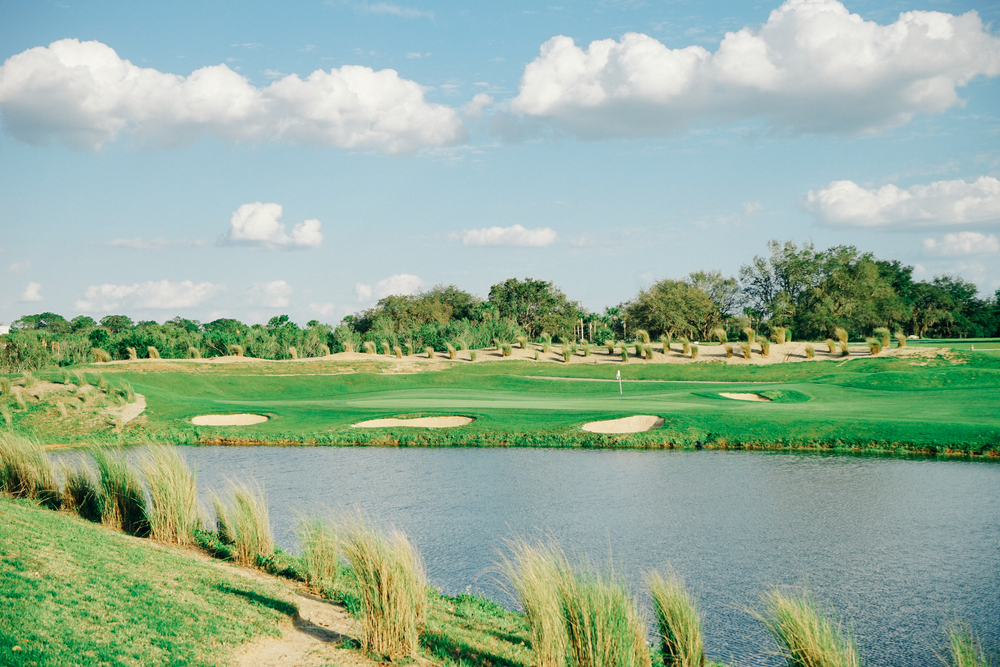
Designed by Greg Norman — a man who spent the better part of his career trying to win The Open Championship — the International was deliberately built to replicate the look, feel, and playing style of links golf. And remarkably, it works. The fairways are firm, fast, and wind-exposed. Grassy dunes frame the holes in place of the trees and water hazards that define most Florida layouts. Pot bunkers lie in wait, just as they would at Carnoustie or Royal Birkdale. The routing heads out away from the clubhouse on the front nine and loops back on the inward nine — classic links architecture. When the Florida wind kicks up (and it does), even accomplished golfers will find themselves scrambling to make par.
Norman designed the International to accommodate the ground game, and players who can execute bump-and-run approach shots will be well served on this layout. For British golfers, that instinct is already hardwired — you’ve been playing bump-and-run since you were a junior. Here, that’s not a backup plan. It’s the strategy.
The International offers a golf experience unlike any other in the Orlando area, but one that will be familiar to those who have played the links courses of Scotland and Ireland. That’s not marketing copy — it’s a genuine reflection of what Norman built here. The course hosted the PGA Tour’s Father/Son Challenge for several years running, and its reputation among American golfers remains sky-high.
The National Course, the gentler sibling just steps away, offers a more traditional American parkland experience. The classic parkland course design winds through 200 acres of secluded woodlands, wetlands, and former orange groves, with lush fairways, 80 sculpted bunkers, and numerous doglegs and picturesque water hazards. Water appears on numerous holes, but few require forced carries — a welcome relief after the demands of the International. It’s the ideal course for higher-handicap members of your group, or for a second round on the same day when your legs and your scorecard need a more forgiving afternoon.
The wider ChampionsGate resort, operated by Omni Hotels, adds genuine polish to the experience. The David Leadbetter Golf Academy — one of the most respected coaching operations in the world — is based here, offering everything from 30-minute tune-up sessions to multi-day schools. The practice facilities are outstanding. The pro shop is well-stocked. And seven onsite restaurants mean you won’t be eating petrol station sandwiches between rounds.
Practical notes: Green fees at ChampionsGate reflect the resort’s premium positioning, running from around $225 to $325 depending on season and time of day. Staying at the Omni hotel unlocks stay-and-play packages that can bring the per-round cost down considerably. Book tee times directly through the Omni resort website for the best rates.
2. Orange County National Golf Center — Panther Lake & Crooked Cat
For the golfer who wants world-class quality without the resort price tag
Green Fees: $97–$135 per round | Difficulty: Moderate (Crooked Cat) / Moderate-Challenging (Panther Lake) Where: Winter Garden, 30 minutes from Disney | Best for: Value seekers, golf groups, 36-hole days
If ChampionsGate is Orlando’s glossy magazine cover, Orange County National is the feature article that serious golfers keep coming back to re-read. Located in rural Winter Garden, about half an hour from the theme park corridor, it sits on over 900 acres of pleasantly rolling ground completely free of housing developments — a rarity in golf-saturated Central Florida. The moment you arrive, you feel the difference. It feels as though you are heading into the boondocks. But keep going — you are travelling in the right direction, and eventually you’ll arrive at the property, which is set in more than 900 acres of pleasantly rolling ground that is completely devoid of housing.
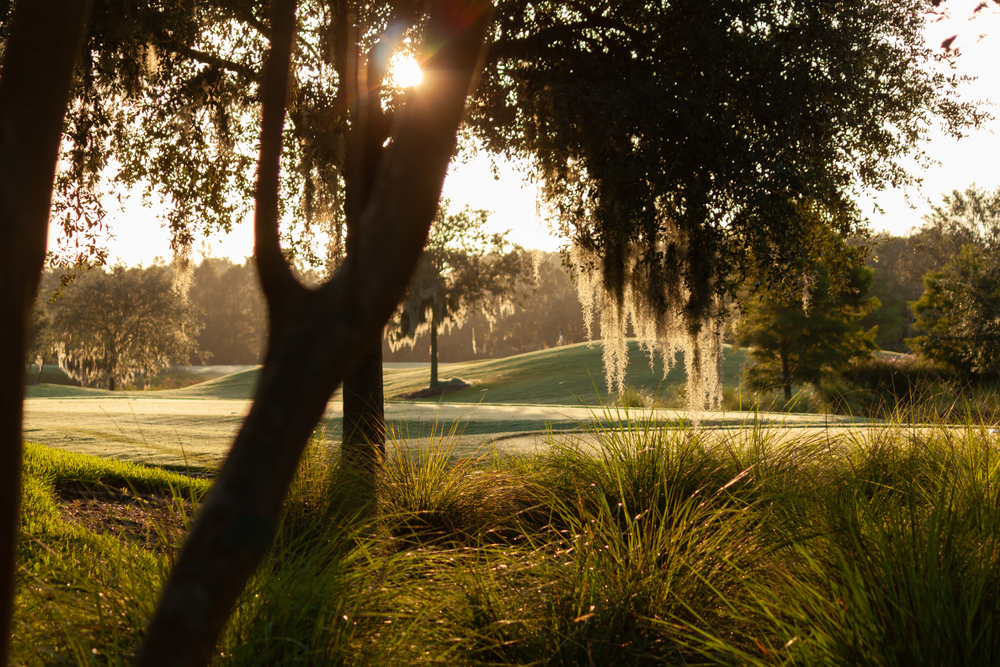
The Panther Lake course is the headline act. The 7,350-yard masterpiece incorporates rolling hills and dramatic elevation changes as it winds through natural oak hammocks, pine trees, and freshwater lakes, and is consistently rated 4.5 stars by Golf Digest’s “Places to Play.” Every hole is distinct — no two play alike in appearance, distance, or challenge. Off the tee, gently sloping fairways demand strategic placement rather than brute force. Approach shots typically play into elevated, well-guarded greens with plenty of contour, which means that two-putting isn’t something you can take for granted. Panther Lake has hosted the PGA Tour Qualifying School Finals on multiple occasions, which tells you everything you need to know about its championship credentials.
The Crooked Cat course provides a wonderful contrast. Where Panther Lake plays through tree-lined corridors and rewards accuracy, Crooked Cat opens up into something that genuinely feels like heathland golf. With fewer trees, wider landing areas, native heather and mounding framing the fairways, Crooked Cat presents golfers more of a links-style look — it may well be the most naturally beautiful Orlando golf course. The back nine is particularly well regarded, offering length and challenge that separate the low handicappers from everyone else. In 2023, it hosted a LIV Golf Tour event — further evidence that this is not just a tourist track.
British visitors have been quietly championing Orange County National for years. The Bermuda grass rough, the pace of play, the complimentary range balls, the GPS-equipped carts with ice-box water — the whole operation is remarkably well run. One UK visitor noted that the Bermuda grass is “more like our own grass in the UK — sometimes it grows and is solid and is impossible to get a ball out of the rough, this stuff was soft and wispy and just a dream.”
The onsite Lodge offers comfortable, no-frills accommodation for those who want to roll out of bed and onto the first tee — and playing 36 holes across two very different championship courses in a single day is genuinely one of the great golf experiences in Florida.
Practical notes: Green fees at OCN represent outstanding value for the quality on offer. At $97–$135 per round, you’re getting a course that has hosted professional tour events at a fraction of what you’d pay at a comparable resort. Book directly through the OCN website. The 42-acre circular driving range — once voted the best in America — is included with your green fee, so arrive early and make proper use of it.
3. Reunion Resort & Golf Club — The Nicklaus, Palmer & Watson Courses
For the golfer who wants to play three legends’ courses in one holiday
Green Fees: $100–$200 per round | Difficulty: Moderate-Challenging across all three Where: Kissimmee, 15 minutes from Disney | Best for: Golf enthusiasts, resort stays, groups
Read also: Driving and Getting Around the USA – A Complete Guide for UK Travellers
There’s a party trick that Reunion Resort pulls off that no other golf destination in the world can match: you can play courses designed by Jack Nicklaus, Arnold Palmer, and Tom Watson — three of the greatest golfers who ever lived, who between them collected 33 Major Championships — all on the same property, in the same week. It is the world’s only resort to feature three signature courses designed by these three legendary designers, all in one place.
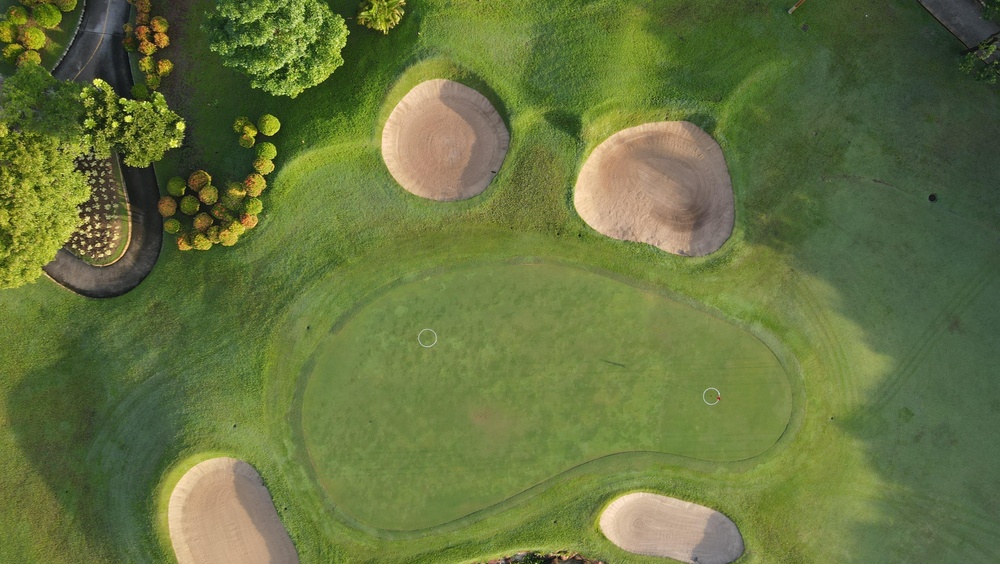
That’s not a marketing gimmick. Each course is a genuine reflection of its designer’s philosophy, his playing style, and his vision of what golf should demand from those who attempt it.
The Palmer Course is, appropriately, the most fun. Arnold Palmer was a golfer who attacked, who went for pins others would lay up from, who turned galleries into armies of followers because of his willingness to take risks. His course sprawls over hilly, rolling terrain and offers 6,916 yards of engaging play with elevation changes of up to 50 feet. There are risk/reward decisions on nearly every hole — the kind where you stand on the tee and find yourself genuinely debating whether to go for it or play safe. The opening hole’s severely sloping green and the dramatic 50-foot elevation drop on the second are the kind of moments you’ll be talking about at dinner that evening.
The Watson Course demands something different — precision and a trustworthy short game. The course is celebrated for its strategically placed bunkers and undulating greens, and to score well, you must focus on accuracy above anything else. Six tee boxes make it accessible to golfers at all levels, but the double-tiered greens and wide collection areas will punish anything but a well-struck iron. It’s the most cerebral of the three courses, the one that rewards patience and course management over aggression.
The Nicklaus Course is the most architecturally distinctive. The Nicklaus Course is generally forgiving off the tee, but small, undulating greens place a premium on precise iron play — elevated railroad-tie tees and greens, along with the occasional pot bunker, give the course real character. The fairways are wider than you’d expect from a Nicklaus design, but the greens are the smallest and most contoured of the three, demanding that you think carefully about where you’re leaving your approach shot, not just whether you can reach the flag.
Beyond the golf, Reunion Resort is a proper luxury destination. The Palmer and Watson courses share a clubhouse, while the Nicklaus Course has its own dedicated building — Traditions — where steaks, flatbreads, and a fine wine list await after your round. The wider resort features pools, spa facilities, and villa-style accommodation that makes it ideal for groups with mixed interests.
Practical notes: Reunion Resort courses are open to guests and members only, so a stay at the resort is required to access the tee sheet. Green fees are dynamically priced and vary by season and time of day. Tee times must be booked by phone through the resort’s golf desk at +1 407 396 3199, and advance booking is strongly recommended. Note that the first available tee time for visiting golfers is typically 10:30am.
4. Southern Dunes Golf & Country Club
For the golfer who wants to be genuinely surprised
Green Fees: $94–$135 per round | Difficulty: Challenging Where: Haines City, 45 minutes from Disney | Best for: Adventurous golfers, those who’ve “done” the resort courses
Southern Dunes is the course that Orlando’s best-kept-secret enthusiasts whisper about. It’s not the most convenient — Haines City is about 45 minutes from the Disney resort corridor, and there’s nothing particularly glam about the drive. But the moment you pull up and see the rolling, treeless terrain stretching away from the clubhouse, something clicks. This doesn’t look like Florida. It doesn’t feel like Florida. It is one of the most unusual and rewarding golf experiences in the entire state.
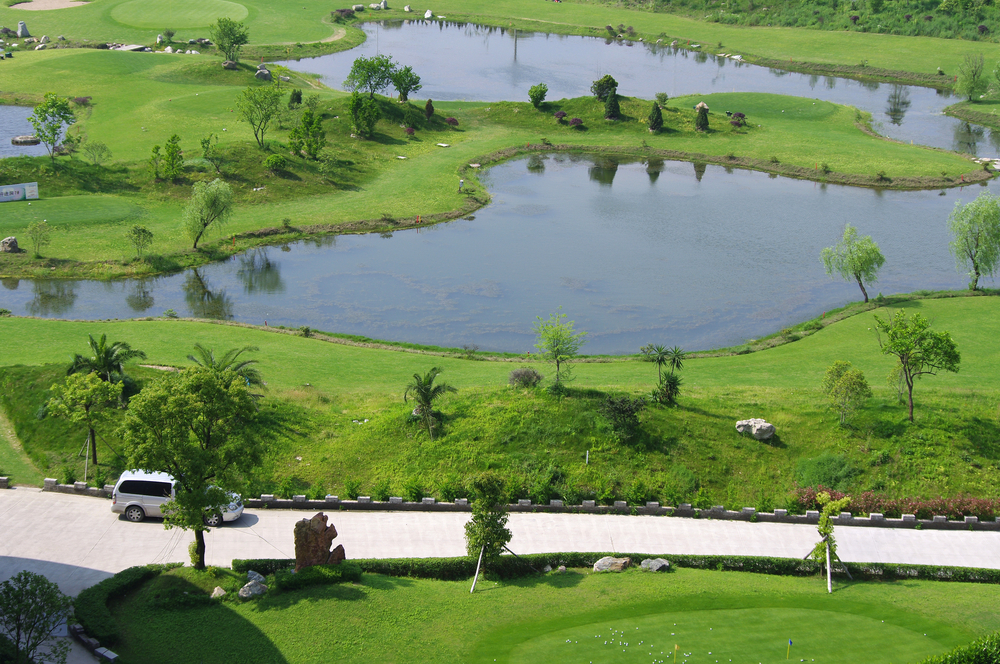
The story behind the course is almost as good as the golf itself. In 1989, a severe freeze devastated 350 acres of citrus grove in central Florida. Rather than replant, the group of landowners made a different decision — they would build a golf course on the rolling, damaged land instead. What they created is a layout that features elevation changes of up to 100 feet across its 18 holes, with no housing developments lining the fairways and no manufactured lakes interrupting the natural flow of the terrain.
The primary defence here isn’t water — it’s sand. Tall-lipped bunkers guard fairways and greens in a way that recalls the great inland links of Britain: Woodhall Spa, Ganton, Hunstanton. The fairways roll and tumble in genuinely unpredictable ways, and the greens are large, contoured, and deceptively quick. It’s a thinking-person’s course, one that punishes thoughtless aggression and rewards the kind of careful, positional golf that British players understand intuitively.
Southern Dunes has repeatedly cracked the GolfPass U.S. Top 50 rankings and carries a GolfPass Rating Index of 4.5, with reviewers specifically calling out its value score of 4.6. That combination — world-class design, genuine challenge, and sub-$135 green fees — is extraordinarily rare. It has also become a favourite among Orlando’s golfing locals, who tend to be far harder to impress than visiting tourists.
For UK golfers who’ve already played the big resort names and want something that feels genuinely different — something with terrain, character, and a design philosophy that rewards proper golf rather than resort spectacle — Southern Dunes is the course to put at the top of your list.
Practical notes: Book tee times well in advance, especially during peak season (November–April), as locals snap them up quickly. The drive from the Disney area takes around 45 minutes via the US-27 corridor — rent a car, bring snacks, and make a proper day of it. Green fees include the cart. Club hire is available but limited, so pre-booking is advisable if you’re not bringing your own set.
Renting Clubs vs. Bringing Your Own
For a week-long trip, shipping your clubs via a specialist service (Ship Sticks operates throughout Florida) often works out cheaper and more convenient than renting each day, where sets typically run $50–$75 per round. If you’re only playing two or three rounds, rental is perfectly fine — most Orlando courses offer modern, serviceable equipment. Always pre-book rental sets rather than assuming availability, particularly during busy periods.
The Best Time to Go
November through April offers the most comfortable playing conditions — temperatures between 18°C and 27°C, low humidity, and reliable sunshine. Green fees are at their peak during this window. If budget matters more than perfect conditions, May and October offer a good middle ground: reasonable heat, significantly lower prices, and fewer tourists. The summer months (June–September) are hot and humid, with afternoon thunderstorms that typically pass within an hour, but morning tee times are perfectly manageable and green fees can be up to 50% less than winter rates.
Orlando’s golf is one of the world’s great open secrets. Book the flights, hire the car, pack the sun cream, and prepare to play better golf than you have any right to expect — in sunshine that no British winter can compete with.